TURIYA LITERARY REVIEW
TLR Issue 1-Spring 2026
SHIMMERING
The discriminant of a quadratic formula determines the nature of solutions of a quadratic equation. Prasad wrote this on the blackboard and then turned sharply to face the class. From the last row a boy had produced a sound – half bark, half whine – like a street dog trying to attract his attention. Where on this wretched island would the boy have seen a dog? Perhaps in some Bollywood movie on television? Prasad’s gaze drifted slowly across the classroom. In the front row, three girls had already finished copying the explanation from the board and were now solemnly sketching human skulls beneath it, with a sense of grave responsibility. Suddenly, Prasad wondered. Was it “discriminant” or “determinant” that he should have written?
In the second row, a boy slept peacefully with his head on the desk, utterly unconcerned about the class’s study of the nature of quadratic solutions. Prasad felt relieved when he did not see Shaheed, his chief tormentor in the class, in the third row. Once, while Prasad was trying to mediate between two girls who fought over a purple Sharpie, each claiming it as her own, Shaheed had leapt out of the window and ran away from school. Later, when word was sent to his home and the whole island began searching for him, they finally found him hiding in a fishing boat, smoking. To manage that one boy, his family, the school, and even the entire island seemed to struggle. And yet, it was Prasad who had had to deal with him in the past three years, teaching him mathematics in eighth, ninth, and now tenth grade.
Prasad flipped through the textbook on his desk to check if the word he had written on the board was indeed correct. Then he glanced at his watch. Twenty minutes remained before the class ended. Twenty painful minutes in which he had to make sure the seventeen students present (three were absent that day) understood the problems he had given them. Minutes that weighed heavily in his empty stomach, between the Ye-Ye coffee he had drunk early in the morning and the breakfast he would have only after the first period ended.
When he stepped out after the class ended, the school’s principal, Ibrahim, appeared before him. It was the principal’s routine to walk around monitoring classes just as the first period ended. The principal smiled at him, showing his buck teeth. “Prasad, I need to talk to you. Could you come to my office?” he said.
There goes my breakfast, thought Prasad. “Of course, sir. Right now?”
“Yes, come along with me,” said Ibrahim, walking ahead. Prasad followed, clutching his textbook, chalk pieces, and eraser tightly in one hand.
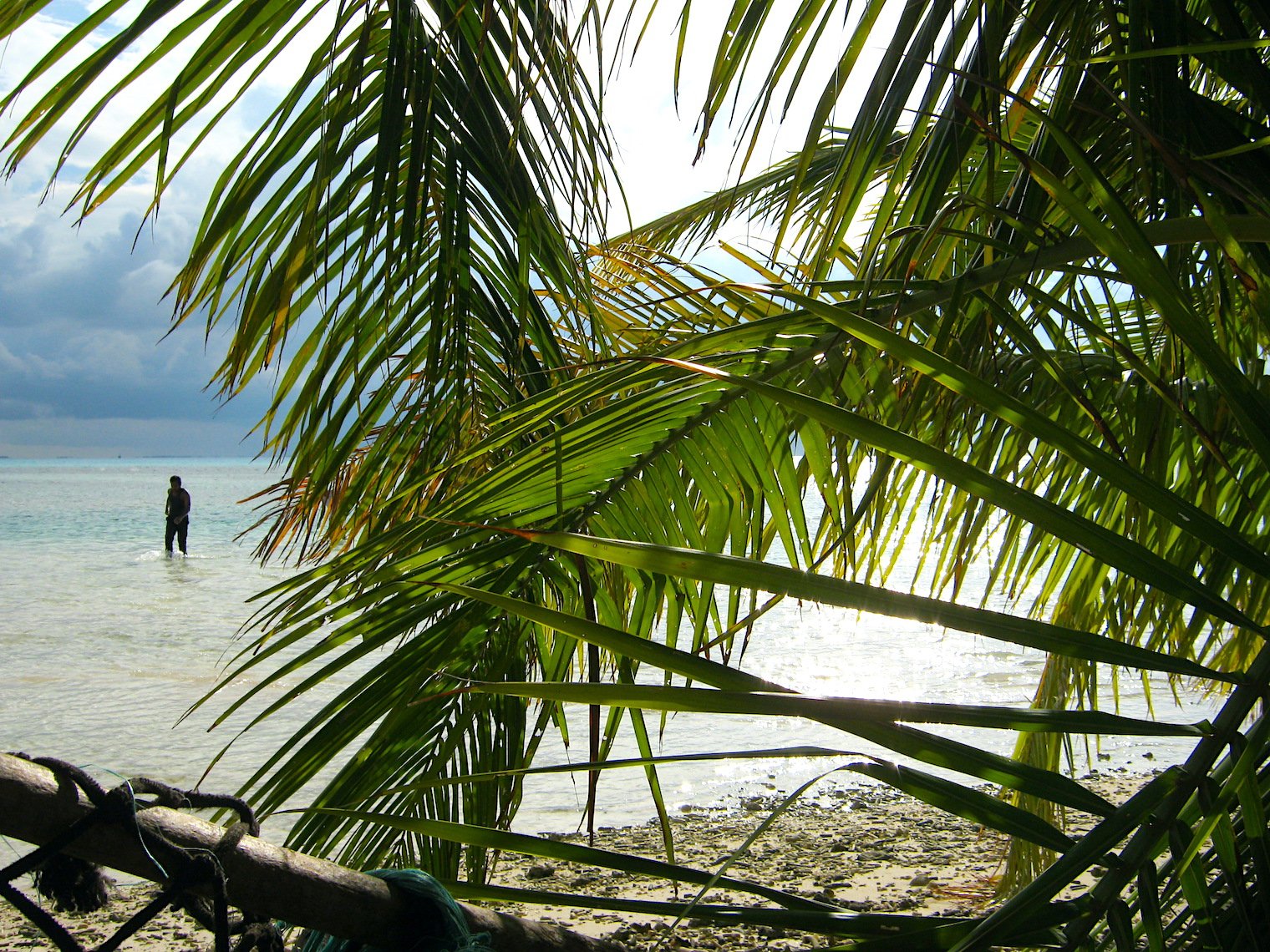
Outside the school gate, the pale blue sea shimmered in the sunlight, waves curling and caressing the shore before retreating. Orange-hued coconut palms swayed gently in the breeze, holding their clusters aloft.
In his office, Ibrahim sat behind a large mahogany desk with a polished surface. He sprayed room freshener into a small plastic flowerpot on the desk. The thick scent of roses filled the air. Is he doing this to mask the smell of my sweat? Prasad wondered. He sat upright on the edge of the chair.
Ibrahim slid a sheet of paper toward him. Prasad bent down to look. It was a photocopy of a student’s notebook page. The tick marks showed that the teacher had already corrected it.
“Today a parent brought me this notebook,” Ibrahim said. “Prasad, do you see any mistakes here?”
Prasad read through it. The sums were based on the ascending and descending order of numbers. Simple eighth‑grade math. The teacher had ticked them all correct. Prasad too found no error in the student’s work. He looked up at Ibrahim, a puzzled look in his eyes.
“For increasing order, the heading here says descending. And for decreasing order, it says ascending,” Ibrahim pointed out.
Prasad checked again. Yes, that was how it was written. “Perhaps the student wrote it wrong?”
“I’ve checked all the notebooks in that class. Every single one has it written that way.”
“Sir, I’ll ask my department teachers about this today,” Prasad said. He was the head of the mathematics department, appointed three years ago when the previous head resigned. In the Maldives, three years of teaching experience was considered sufficient for promotion.
“No need, Prasad. This notebook came from your class. You’re the one who taught it that way.”
Prasad remained quiet.
“Look, Prasad,” Ibrahim continued, “the Maldives is not like your home country. If parents complain about a teacher, I must take action. I understand this mistake isn’t due to your lack of mathematical knowledge, but because of your difficulty with the English language. Perhaps you learned math in your own language. But I cannot explain all this to our parents.”
“I’ll make sure it doesn’t happen again, sir,” Prasad replied.
Ibrahim smiled again, as if to say, I am your protector in this place.
***
In the teachers’ staff room, Varun sat opposite Prasad’s usual spot, correcting papers. “Hey, why so late? I was waiting for you. My stomach’s growling,” he said when Prasad entered.
Prasad threw his things onto the desk. “My stomach’s burning. Not from hunger. This job is torture, Varun. In class, the kids drive me crazy. Outside, the principal and supervisors reprimand me all the time, for one thing or another.” He quickly explained the situation to Varun.
“You’re letting this upset you? We came here just to earn some money. We have to face its challenges too.”
“I can’t take it anymore. I feel like quitting and leaving.”
“Come on. Look at this fellow’s paper.” Varun showed him one of the papers he was correcting. “He writes, ‘Bioluminescence means a whale’s poop rising to the surface and glowing,’ what can I do but laugh? Should I cry instead?”
“You’re impossible!”
“No, Prasad. We came here, so we must manage and keep going. If we leave this job, will we get another chance like this?”
“Shall we go eat? I’m hungry now.”
They walked out of the staff room into the school grounds. “Why do you only see the problems? You don’t talk like someone who’s been here three years already,” Varun said.
“Maybe because I have been here three years, I think that way,” Prasad replied.
“Alright, apart from earning money, what else have we done here? We watch Tamil movies downloaded illegally. Twice a week we play cricket. We turn the Tata Sky antenna to catch cracked images of soap operas and cricket matches. But have we ever tried to live the life of this island?” asked Varun.
“You mean climbing onto a boat to go fishing?”
“Why not? There’s an island called Vaadhoo where bioluminescence appears often. People come from all over the world to see it. Every year we fly back to India via Male. From Male, Vaadhoo is just an hour by boat. Have we ever thought of going there? Isn’t it important to gather experiences from the place we live in?”
As they passed the school gate, they saw Vasuki, another teacher from India who joined their school just that year, struggling to quiet the boisterous students of class 9C. Her face showed both sorrow and exhaustion. Prasad thought of his wife, Dharini, who taught mathematics in the nearby school. She must be eating in her school canteen at that very moment.
“One day I’ll go to Vaadhoo,” Varun said.
Prasad laughed. “To see a whale’s poop glowing?”
They crossed the road opposite the school, turned into a sandy lane filled with pebbles, and entered the first house, surrounded by coral‑stone walls.
“Assalamu Alaikum!”
“Wa Alaikum Assalam!” Shaheed’s mother greeted them warmly. “Come in, please. Whatever I cooked has gone cold. I’ll heat it up.” She was a mother of eight children. Her husband worked at a resort. She earned a little extra by preparing breakfast for teachers.
“Bajjaveri hendhune! Haalu kihine!” said Varun, smiling at her.
She laughed. “Varangalu ve! You speak Dhivehi so well! Kocha kan benumi?”
“She’s asking what do we want for breakfast,” Varun explained to Prasad, pride shining on his face.
They sat under the asbestos roof, at a large table covered with mica sheets, and began to quickly stuff into their mouths flatbread rolls filled with tuna.
As he cracked the shell of a boiled egg, Prasad asked, “Shaheed didn’t come to school today?”
“He’s inside. Says he won’t go. Every month I struggle to send him to school. His younger siblings are not like that. He asks, ‘Why study when I can just fish?’”
Shaheed came out of the kitchen, shirtless, grinning at them. His ribs stuck out, and the golden sheen of fine hair glistened on his arms.
“Prasad sir, at least you talk some sense into him,” his mother pleaded.
Prasad thought, if he advised Shaheed in front of his mother, who in class would handle him afterward?
“Do you know how to fish?” Varun asked.
“Oh yes! I’ve gone fishing with my uncle on Fridays and Saturdays,” Shaheed replied.
“Really? Shaheed, can we come fishing with you too?” Varun asked. Prasad shot him a look. Why drag me into this? Shaheed’s mother stared as if wondering what kind of advice this was.
“Sir, I hoped you’d tell him to study properly. Instead you’re asking about fishing!” she said.
“Alright, let me ask a question from the syllabus. Shaheed, do you love the sea?”
Shaheed raised his eyebrows and tilted his head slightly upward. That meant yes. When Prasad first joined the school, he hadn’t understood these gestures from the Maldivian students. After explaining a concept, he would ask, Do you understand? and they would raise their eyebrows and lift their chins. He thought they hadn’t understood, so he kept repeating the question until they stopped gesturing and burst out laughing.
“Fine, here’s a question from my marine biology subject. What is bioluminescence? I’m sure you know a lot about the ocean. Let’s see if you can answer this question”
“Bioloosminiscence?”
“Not bioloosmotion,” Varun turned to Prasad and laughed. Then he turned back to Shaheed. “Come on, tell us. What is it?”
Shaheed pursed his lips and shrugged his shoulders.
Varun stared at him for a few seconds. Prasad softened his smile into a faint grin, bowed his head, and focused on the boiled egg in front of him.
“Alright, I’ll explain,” said Varun finally. “Bioluminescence is a kind of chemical reaction that happens in the sea. Because of it, the ocean’s surface glows with blue light. It’s a marvelous sight. It’s called cold light. Enzymes called luciferin and luciferase, released from certain fish, jellyfish, and bacteria, cause this phenomenon. These organisms emit the chemicals for reasons like finding mates, searching for food, or escaping predators. If you write all this down, you’ll get full marks in the Cambridge IGCSE exam. Vaadhoo Island is famous for it. People come from all over the world to see it.”
“And you want to go and witness it at least once,” said Prasad.
“Yes. But right now, we can go out to sea with Shaheed to fish.”
“Sir, I don’t think that will be easy for you,” said Shaheed. “You have to be ready by two in the morning. Only by crossing the reef and going deep into the ocean can we catch tuna. It’ll be severely cold in the middle of the ocean. And cellphones won’t work.”
“This Friday the two of us will join you on the boat,” said Varun, pointing at Prasad, determination showing in his voice. Immediately Prasad waved his hand in refusal, indicating it was not possible.
“You keep quiet. We got to try something to get to know about it,” said Varun.
“The only thing I can do with the problems I face is resign from this job,” said Prasad. The troubles that had weighed on him all year began once again to crawl through his mind like worms: the unruly behavior of students in class; the torment they inflicted on teachers like him who had come from India, Sri Lanka, Pakistan; the daily ordeal of meetings led by the principal after school. The principal had a notion that any teacher coming from outside of the Maldives had no understanding whatsoever of student‑centered education. This is not your country. You cannot control and dominate students here as you did there. You must come down to their level and make lessons understandable to them, he would say.
These were island people, living entirely within the Islamic faith. Their feelings had to be understood, and one had to mingle with them. They must not be spoken to harshly. Religion must not be discussed with them. (Indeed, the very first question students ask any new teacher is always about religion.) How many restrictions there were!
And what was there in this town to enjoy? Nothing but bare soil, beaches lined with coral rocks that would tear your feet if you walked barefoot, the sun blazing overhead all day, splitting your head and scorching your skin, and the suffocating humidity that steamed your flesh. There were island resorts alright. Could one, with the meagre salary they earned, ever afford to enjoy those resorts? And even if they went, would anyone admit them inside except those with white skin?
How many things had one left behind to come here? Friends, relatives, food, cinema, cricket, politics, Deepavali and Pongal festivals, the annual festival at the Kaliamman temple. All of it. Just to earn some extra money and pay off debts. Before coming here, weren’t we all getting by with meager wages? I mean we hadn’t been starving back there! thought Prasad.
“Four months ago, three men went out fishing in a small boat and never returned. Not even their bodies have been found,” said Shaheed.
***
At home, Dharini placed a hand on Prasad’s forehead to check the temperature. “Do you have a headache?” she asked. Prasad sat with a frown, rolling the mouse and staring at the laptop screen. Suddenly, he turned to her and said, “Shall we just quit this job and go back to India, Dharini?”
“There’s still seventeen lakhs left to pay on the house loan, remember?”
“The school is nothing but torture. The students torment me. And I’m constantly asking myself what I am doing here.”
“If philosophical questions like these had come to you before we took the loan, it would have been easier to make a decision right away.”
“What do you expect me to do? My head feels like it’s about to burst.”
“Prasad, grit your teeth and endure it for three more months. Then in November, when we go to India on leave, it will recharge your battery.”
“But when we return, it’ll be the same mess again. Let’s leave, Dharini. We’ll join some CBSE school and calmly pay off the debt.”
“What more can I say to that?”
Varun called Prasad on his cellphone. “I spoke with that boy’s uncle. Come to the jetty tomorrow at two am. The boat will leave at two‑thirty,” he said.
“You go by yourself,” replied Prasad.
“You must come too. It will be an adventure trip,” said Dharini.
“The adventures happening at school aren’t enough?” Prasad retorted.
Taking the phone from him, Dharini said, “Anna, he will come. I’ll send him over to your room tomorrow night.”
Prasad glowered at her.
***
In Varun’s room, the two of them rose at midnight on Thursday, bathed, and made themselves ready. By one‑thirty they had already reached the jetty. Darkness lay thick all around. In the dim glow of the waxing moon, four or five boats swayed gently upon the restless sea. The wind slipped through their clothes with a whisper, sending a shiver across their skin.
In their shoulder bags they carried the tuna sandwiches Varun had prepared, along with a flask of tea and bottles of water. Prasad worried about what he might do if seasickness struck once they were out in the deep waters.
As they sat sipping tea on a cement slab used for cutting fish, Shaheed and his uncle arrived. Both had long fishing lines coiled around their shoulders, and in their hands rods so tall they could match the height of two men standing one atop the other.
On approaching them, Shaheed’s uncle poured a handful of areca nut shavings into his palm, sprinkled supari powder over them, and extended his hand as if to ask, “Would you like some too?” When the two shook their heads in refusal, he stuffed the mixture into his own mouth.
“Don’t they have any fishing nets?” said Prasad.
“Nets aren’t necessary. We’re only going to catch what we want. We’ll catch tuna alone and let the smaller fish go. If we cast a net, everything will get caught,” replied Shaheed.
“With just these single fishing rods, how many fish do you think they can catch?” Prasad said to Varun in Tamil.
***
The boat they boarded felt cramped for four people. With the faint whirring of its small motor, they moved steadily into the sea for half an hour. Shaheed’s uncle gripped the tiller, chewing areca nut shavings as he stared blankly into the vastness between the sea and the sky. Shaheed opened a polythene bag, took out a bunch of small fish from inside, and began slicing them, two at a time. At his signal, Prasad and Varun put on life jackets and sat silently, huddled against the cold, gazing around them. Prasad slipped his hand into his trouser pocket, pulled out his cellphone wrapped in a plastic bag, and checked for signal. Nothing. The boat rose and fell with the swells, lurching forward through the rolling waves.
Shaheed’s uncle suddenly slowed the boat. Shaheed held out a bag filled with pieces of fish toward them. They looked on, puzzled.
“Take this and scatter it widely into the sea,” he said.
Prasad and Varun scooped up the fish with both hands and flung them into the water. The boat slowed even further, almost to a halt. Uncle and nephew picked up their fishing rods and moved to one end of the boat. Shaheed gestured for Prasad and Varun to join them. Once they did, they cast their lines into the sea.
For a moment, Prasad could not comprehend their way of fishing. The instant the line was cast into the sea, it was pulled back, and at its hook a large tuna was already caught. With a quick swing over the shoulder, the rod sent the fish onto the deck, where it thrashed violently while the line was cast back immediately into the water. At once, another fish was caught. Just the bare hook seemed to draw them in. Again and again the rods went into the sea and returned with tuna fish.
Within barely ten minutes, more than sixty tuna were flapping across the deck. Varun, eyes wide, watched their ceaseless motion in astonishment. He clasped Prasad’s shoulder and shook it with excitement.
Shaheed and his uncle appeared to pause, as if taking a break from the relentless fishing. The uncle at once stuffed another batch of areca nut shavings into his mouth. Shaheed crouched, examining the writhing fish one by one in his hands. Varun bent beside him and said, “There seem to be many yellowfin among them.” Apparently his palate’s preference.
Shaheed pressed a finger to his lips, signaling him to be silent, and gestured toward the sea.
Prasad sat beside Varun, gazing intently into the sea. At first, in the darkness, nothing was visible. Then, with the faint aid of moonlight, he discerned the shadowy outlines of several large fish about thirty feet away, their backs just breaking the surface. Perhaps fifteen of them, all floating still. Were they dead?
“Fiyala,” said Shaheed’s uncle, in Dhivehi.
“Dolphins. They’re sleeping,” explained Shaheed.
As they prepared for the next round of baiting and casting, the boat suddenly lurched. Shaheed and his uncle looked around in alarm. Then, with a sharp cry—“Sit down!”—Shaheed threw himself flat upon the deck. The other three scrambled to sit quickly. The boat shook violently.
“What’s happening?” Prasad asked Varun, his face tense with fear.
Even as he spoke, they felt something immense brushing hard against the hull from below. A great surge rose from the depths, and the boat was lifted into the air. In an instant, all four were hurled into the sea. The boat toppled sideways, spilling the catch and their belongings. Only four or five boxes remained afloat on the surface. Everything else had submerged into the water.
The four men drifted apart in different directions. “Femunu! Femunu!” shouted Shaheed’s uncle.
Prasad realized that some monstrous fish had passed beneath them. The water rose to his chest, pressing heavily against him. In panic, he thrust his hand into his pants pocket, searching for his phone. It was still there, safely wrapped. He pulled it out, held it high above the waves to keep it dry, and checked for signals. Nothing. Still, he tried calling Dharini. No response. He kept the phone raised above him, clinging to it as though it were a lifeline.
“What overturned this boat?” Prasad shouted across the water.
“I don’t know. Uncle says it might have been a shark,” Shaheed called back from five feet away.
Prasad turned toward Varun, whose eyes were closed as he floated. Had he fainted?
“We’ll just keep floating. If dawn comes and we haven’t returned, a boat will come looking for us,” Shaheed said.
But doubts churned in Prasad’s mind. Would they be drifting here until morning? And what if the shark which had capsized their boat decides to return to this very spot? Around them, many of the fish they had caught floated lifelessly, circling in the water.
Prasad did not voice his fears. Instead, he raised his hands, gripping his cellphone firmly above the waves. The moment a signal appeared, he would call Dharini. Through her, help would come.
By now the boat had sunk completely. For a few minutes they floated in place, but the wind pressed steadily in one direction, driving them farther apart. The distance between the four men widened with each passing moment. Darkness still refused to lift.
Prasad’s arm ached sharply from holding his cellphone aloft. He glanced at it once. The time was three‑twenty. Far off, at least a hundred feet away, the scattered boxes from their boat drifted on the surface. Each of his fishing partners floated sluggishly, separated by an ever‑growing expanse. His eyes grew heavy. Beyond his own will, his head drooped to one side, and suddenly he slipped into sleep.
A piercing brightness seeped through his closed eyelids, jolting him awake. He lifted his head reluctantly and saw the ocean stretched before his eyes like a boundless curtain. Around him floated shimmering blue circles, flickering faintly. Was it oil leaking from the boat, glinting in the moonlight? As he watched their slow drift, it seemed those circles were being conjured out of the depths below. The wind, he noticed, had stilled completely.
When he raised his head further, he found himself breathless. A flood of blue light surrounded the four of them, as though molten blue fire had been poured across the sea’s surface. The waves glittered with a luminous sheen, and for nearly two hundred feet around, a glowing blue mantle seemed to cover the waters. The expanse pulsed, fading and flaring every few seconds, like a vast lung expanding and contracting in breath.
Prasad wondered what lay beneath. Drawing a deep breath, he plunged his head into the water. As far as his eyes could see, radiant jellyfish contracted and unfurled, drifting slowly in every direction. From them the blue light streamed, and only by their glow could they be seen at all. Other fish swam with long whiskers, emitting the same blue radiance, some even shimmering green. He turned his head this way and that, trying to drink in the vision with his eyes.
Suddenly, golden sparks burst like scattered dust across the water. It felt as though he had stepped into a dreamworld crafted solely for him. Straining to see more, he thought he glimpsed a whale swimming below. No, it was a human figure with two legs. Shaheed, who had stripped off his life jacket, was swimming in the sea.
Before Prasad could search for the legs of the others floating nearby, his lungs screamed for air. He thrashed upward and broke the surface.
Before him, four or five dolphins streaked past, their bodies painted in glowing blue light. They tore through the luminous veil, diving into the depths, then leaping back into the air above the waves. The dream had not yet dissolved.
“Ooh‑hooey!” Varun shouted towards him from a distance, hearing the splash he had made. “Whale poop!” he cried, laughing.
Prasad let out a quiet laugh. With his left hand he brushed the seawater from his face, then ran his tongue across his lips, tasting the sharp tang of salt. He drew in the ocean wind, filling his lungs.
And then, suddenly, the phone he had been holding aloft in his right hand trembled, alive with sound.
About
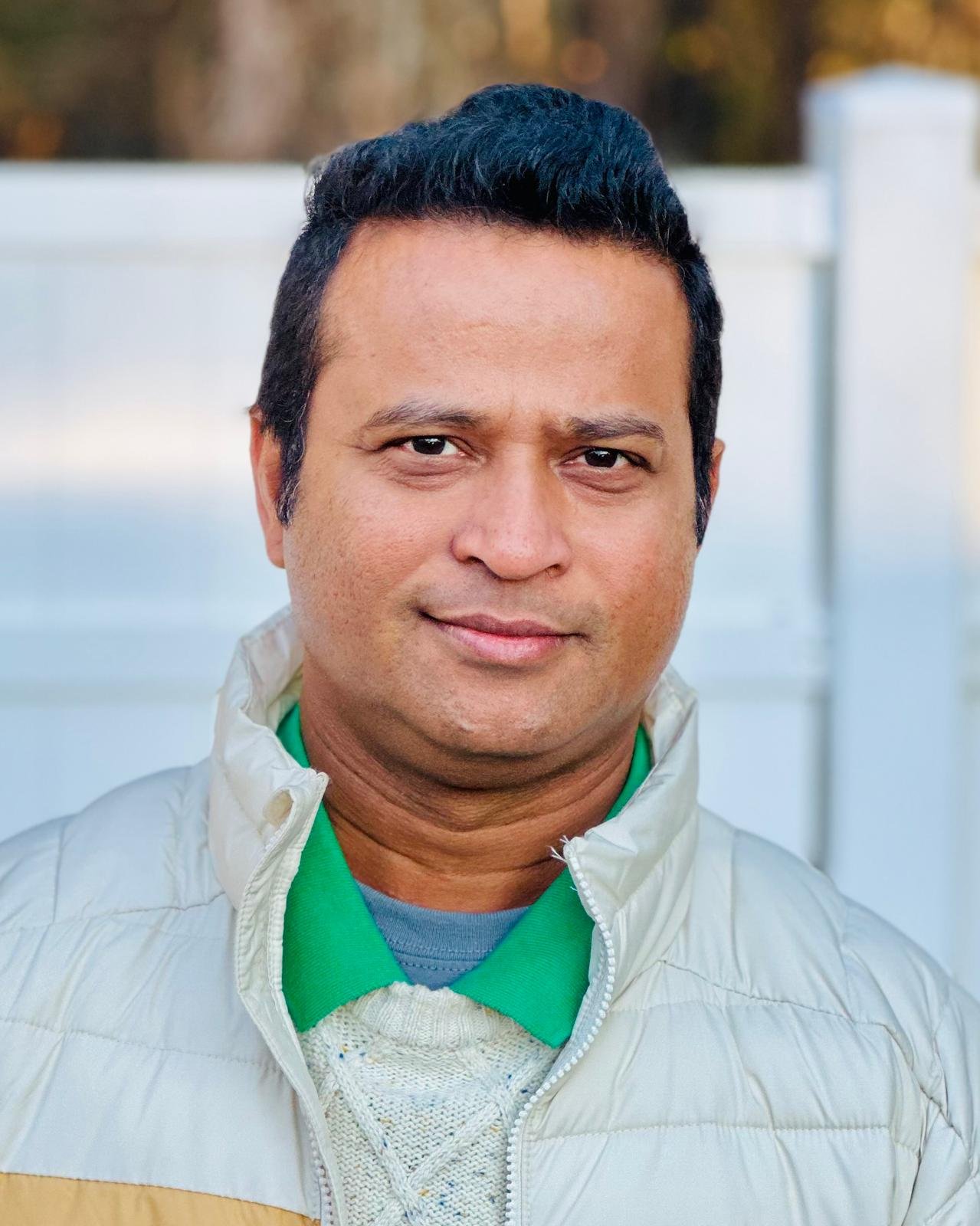
Jegadeesh Kumar writes, both in English and Tamil, short stories, poems, and Eastern Philosophy. His work has appeared in The Prometheus Dreaming, Indian Periodical, Spillwords Press, The Defunct Magazine, Piker Press, Impspired magazine, Consequence and elsewhere. A Fine Thread and Other Stories – a short story collection in his translation has been published by Ratna Books India in January 2024. Jegadeesh Kumar received the prestigious Translation Prize from the Canada Tamil Literary Garden in 2024 for his work A Journey Through Words – a book of literary non-fiction. He has also published a collection of his short stories in Tamil Porkugai Ragasiyam (The Golden Cave Secret). Jegadeesh has compiled and curated two anthologies to be released in the Living Tamil LitFest, New York City, in April 2026. A member of NSLS (National Society for Leadership and Success), he has won the Robert Noyce Educator scholarship to complete his Master’s degree in STEM Education at the Citadel Military College of Charleston, SC.